


Which midsize truck rides smoother around Fremont, NE — 2026 Honda Ridgeline or 2026 Toyota Tacoma?
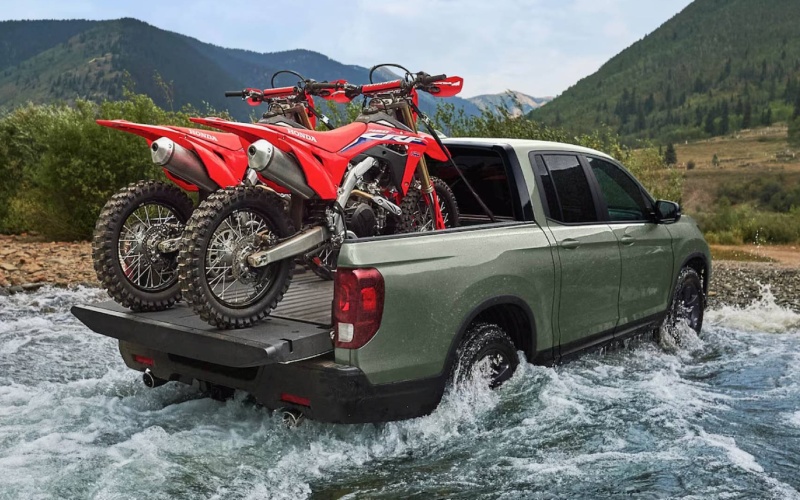
Vern Eide Honda Sioux City – Which midsize truck rides smoother around Fremont, NE — 2026 Honda Ridgeline or 2026 Toyota Tacoma?
Ride quality is a top question for midsize truck shoppers, and for good reason. Trucks need to pull their weight on job sites and weekend runs, but most miles are still spent commuting, handling errands, and navigating construction-chopped pavement. If your daily routes swing between Fremont’s city streets, Highway 77 connectors, and a few miles of gravel on the way to the river, you’ve probably wondered: which midsize pickup actually rides smoother day-to-day—the 2026 Honda Ridgeline or the 2026 Toyota Tacoma?
Chassis design is the starting point
Ride quality begins with the foundation. Ridgeline is engineered around a unibody structure with fully independent front and rear suspensions. That construction is inherently stiffer and more refined, allowing the suspension to control wheel movement rather than the frame flexing under load. The result is less head toss on broken pavement, fewer bobbing motions over railroad crossings, and a general sense of calm when you’re rolling past traffic cones on Military Avenue.
Tacoma uses a body-on-frame layout—a rugged approach that pays dividends in certain off-road scenarios and heavy-duty setups. Newer Tacoma models add sophisticated components like a multi-link rear suspension and, on select trims, a Stabilizer Disconnect Mechanism (SDM) for bigger axle articulation. Those upgrades are real, and they matter in the dirt. But on the same streets, expansion joints, and washboard gravel that make up much of everyday driving, the Ridgeline’s independent setup simply absorbs the chatter more gracefully.
AWD traction and composure in changing conditions
All Ridgelines include i-VTM4® all-wheel drive, a system that can send power not just front to rear, but side to side, actively helping the truck turn and stabilize itself in corners. Think damp mornings, winds pushing across the Platte River, or a shallow coat of dust on blacktop outside town—those are the moments when i-VTM4® feels invisible yet reassuring. Intelligent Traction Management offers Normal, Snow, Sand, and Mud modes so you can tailor the response with a tap, and on TrailSport, retuned springs and dampers plus all-terrain tires amplify rugged confidence without ruining weekday comfort.
Tacoma counters with strong 4WD credentials and helpful tools like Crawl Control and Multi-Terrain Select. If you set out most weekends hunting technical trails, those features are great. But if the most common “trail” in your life is a rutted access road to a campsite or the uneven entrance to a job site, the Ridgeline’s seamless traction and calmer baseline ride will feel like the right tool more often.
Drivetrain feel: smooth power you don’t have to think about
Under the hood, Ridgeline’s V-6 pairs with a 9-speed automatic to deliver smooth, consistent response around town and on the highway. It’s a quiet kind of capability—easy merges, decisive passing, and calm downshifts when you ease into rolling hills east of town. Tacoma’s turbocharged 4-cylinder and available hybrid bring torque-forward punch; they’re strong, but can feel busier in everyday use, especially if you prefer the unobtrusive character of a traditional V-6.
Cabin calm and the details you feel daily
A smoother ride is more than springs and shocks—it’s also noise control and ergonomic design. Ridgeline’s cabin remains a standout for its low cowl, excellent outward visibility, and storage that actually matches truck life: a deep center console, wide door pockets, and 60/40 split lift-up rear seats that create tall cargo space in seconds. Standard tri-zone automatic climate control keeps passengers happy without constant fiddling. Wireless Apple CarPlay® and Android Auto™ make connecting simple, and an available wireless charger cuts cable clutter. Tacoma’s latest cab is modern and comfortable, yet the Ridgeline’s mix of visibility, storage, and low road noise makes it easier to live with when you’re racking up miles between home, work, and weekend projects.
What about bed utility when comfort is a priority?
Choosing a smoother-riding truck shouldn’t mean giving up utility. Ridgeline’s Dual-Action Tailgate lets you load heavy items by swinging the gate to the side, and the lockable In-Bed Trunk® with a drain doubles as secure storage or a rinseable spot for muddy gear. The bed’s minimal wheelwell intrusions let 4-by-8 plywood lie flat—perfect for home projects or a quick supply run. Tacoma brings a tough composite bed, tie-downs, and accessory-ready versatility, but Ridgeline’s built-in trunk and dual-hinge tailgate prove their worth week after week.
Test both, then trust your back and your routine
If you’re still deciding, the smartest step is to drive both trucks over the same streets you cover every day. Pick a route with cracked concrete, a few quick lane changes, and a short stretch of gravel. Note steering stability through sweepers, how much the rear hops over bumps, and how fresh you feel after fifteen minutes. Most shoppers who do this tell us the Ridgeline simply feels calmer and easier to place—traits that matter long after the new-truck sheen wears off.
Frequently Asked Questions:
Does the Ridgeline’s unibody construction limit its capability?
No. Ridgeline tows up to 5,000 pounds, carries a serious payload, and its i-VTM4® AWD plus terrain modes handle rutted drives, boat ramps, and muddy lots confidently. The unibody design emphasizes control and comfort without giving up everyday truck strength.
Will Tacoma ride as smoothly if I choose the right trim?
Specific Tacoma trims with advanced suspension hardware improve compliance, but the fundamentals—body-on-frame with a solid rear axle—still transmit more motion over patchy roads compared to Ridgeline’s fully independent setup.
Which truck is quieter at highway speeds?
Both are impressively refined by midsize truck standards, but Ridgeline’s structure and suspension tuning typically result in less booming and fewer secondary motions at 60–70 mph, so conversations stay easy and fatigue is reduced over longer stints.
When you’re ready to feel the difference for yourself, schedule a back-to-back drive and bring your everyday gear. One loop will tell you which truck keeps life moving with less effort. Vern Eide Honda Sioux City can map a route that mirrors your real commute and weekend stops so your comparison is fair and focused on what you value most.
- Ride foundation: Ridgeline’s unibody and fully independent suspension target calm, controlled motion on real-world roads.
- Everyday traction: Standard i-VTM4® AWD with Snow, Sand, and Mud modes builds confidence when conditions change.
- Smart bed features: Dual-Action Tailgate, lockable In-Bed Trunk®, and a bed that fits 4-by-8 plywood flat make projects simpler.
If you’re comparing comfort first, a thorough test drive often settles it. Our team is serving Fremont, Council Bluffs, and Des Moines with tailored demos that show how each truck behaves over the same terrain and traffic you see every week.
0 comment(s) so far on Which midsize truck rides smoother around Fremont, NE — 2026 Honda Ridgeline or 2026 Toyota Tacoma?